Petrol vs Diesel: Which Should You Buy?
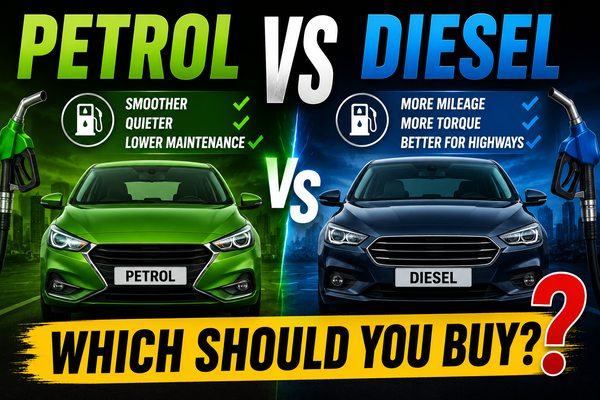
Anyone searching for a used car on AutoTrader or Cars.co.za will soon encounter the same question: petrol or diesel? It's one of the most important decisions you'll make, as the right choice can significantly affect your running costs, performance, and long-term ownership experience. Petrol or diesel. It's right there next to the price, staring at you, and if you're not a "car person," it can feel like a trick question. Does it even matter? Won't the car just... drive?
It matters more than you'd think. And no, it's not just about what sound the engine makes or how it smells at the pump. The fuel type you choose affects your monthly running costs, how the car behaves on the road, what it'll cost you at resale, and even how much stress you'll deal with if something goes wrong. So let's actually unpack this properly, without the technical mumbo-jumbo that usually makes these articles more confusing than helpful.
Let's start with the basics, in plain English
A petrol engine and a diesel engine both burn fuel to make your car move. The difference is how they do it. Petrol engines use a spark plug to ignite the fuel — think of it like a tiny lightning bolt setting things off. Diesel engines don't need a spark at all. They squeeze the air inside the engine so tightly that it gets hot enough to set the fuel alight on its own.
That's really the whole secret. But that one difference in how the fuel is ignited changes almost everything else about how the car feels, how much it costs to run, and what it's actually good at.
The fuel cost question everyone asks first
Let's be honest, this is usually the deciding factor for most South African buyers, and fair enough — fuel prices have made everyone a lot more fuel-conscious over the past few years.
Diesel tends to give you more kilometres per litre than petrol. A diesel bakkie or SUV can often go 15% to 25% further on the same tank compared to a similar-sized petrol model. If you're doing a lot of highway driving — say you're commuting from Midrand into Sandton every day, or you're constantly on the road between provinces for work — that difference adds up fast over a month.
But here's the catch nobody mentions upfront: diesel and petrol prices don't always move together, and diesel has, at various points, actually been more expensive per litre than petrol. So the fuel-efficiency advantage of diesel can get eaten up depending on what's happening at the pumps that particular month. It's worth checking current fuel prices before you assume diesel is automatically the cheaper option.
CARS GOLD tip: Don't just look at the price per litre when comparing the two. Work out your estimated cost per kilometre instead. Take the car's claimed fuel consumption (in litres per 100km), multiply it by the current fuel price, and you'll get a real number you can compare across different vehicles — petrol or diesel.
Where diesel genuinely shines
Diesel engines are workhorses. If you're the kind of buyer who needs a vehicle for towing a trailer, hauling building materials, driving long distances on gravel roads to a farm or a site, or doing serious highway kilometres every week, diesel is very likely your best friend.
Diesel engines produce more low-end pulling power, which is exactly what you want when you're loaded up or towing something heavy. This is a big reason why so many bakkies in South Africa — your Hiluxes, Rangers, and D-Maxes — are sold predominantly in diesel. It's not a coincidence. The engine type suits the job these vehicles are bought to do.
Diesel engines also tend to be more durable over very high mileages when properly maintained. It's common to see diesel bakkies clock 300,000km or more and still be going strong, provided they've had regular services and haven't been neglected.
Where petrol makes more sense
Now, if your daily driving is mostly around town — dropping the kids at school, popping to the shops, the occasional trip to visit family — a petrol car is very often the smarter, simpler choice.
Petrol engines are generally cheaper to buy upfront. Two similar cars, one petrol and one diesel, and the diesel version will usually carry a higher price tag from new, and that price gap tends to follow the car into the used market too.
Petrol engines are also simpler and typically cheaper to service and repair. Diesel engines have extra components — things that manage fuel injection and emissions — that can be expensive to fix if they go wrong. For buyers watching their budget closely (and let's be honest, that's most of us), a petrol car often means fewer surprises on the mechanic's invoice.
There's also the smoothness factor. Petrol engines tend to rev more freely and feel a little more refined, especially at lower speeds around town. If your daily drive is mostly stop-start traffic rather than open highway, you may actually enjoy the driving experience more in a petrol car.
The maintenance conversation nobody wants to have
This is where we need to be honest with you, because a lot of buyers only find this out after they've already bought the car.
Diesel engines, especially newer ones with more advanced emissions systems, can be costly to repair if something goes wrong. Certain components on modern diesel engines are known for being troublesome and expensive to replace if the car hasn't been serviced properly or has covered a lot of short, stop-start trips rather than long open-road drives (which is actually bad for some diesel systems).
This doesn't mean diesel is a bad choice. It means you need to know what you're buying, service it on schedule, and ideally use it the way it was designed to be used — which is mostly longer trips rather than short five-minute hops to the shops.
CARS GOLD tip: Before buying any used diesel vehicle, ask for the full service history. A diesel with patchy servicing is a much bigger risk than a petrol car with the same gap in its records. This is one area where cutting corners on the purchase price can cost you far more later.
What about resale value?
This is a genuinely tricky one because it depends heavily on the type of vehicle.
For bakkies and SUVs, diesel versions generally hold their value well in South Africa, sometimes even better than the petrol equivalent, simply because there's strong ongoing demand for diesel workhorses from farmers, contractors, and small business owners who need that towing and load-carrying capability.
For smaller hatchbacks and sedans, it often flips the other way. Diesel versions of small cars can actually be harder to sell secondhand because most everyday city buyers don't see the need for a diesel engine in a small runabout, and they're wary of the higher potential repair costs. So a diesel Polo, for example, might sit on the market longer than a petrol one, even if it's a great car.
The lesson here: don't assume diesel automatically means better resale. It depends entirely on what kind of vehicle you're buying and who's likely to want to buy it from you one day.
A quick reality check on driving habits
Before you make a decision, be honest with yourself about how you actually use a car, not how you imagine you might use it one day.
If most of your driving is short trips around the suburbs — under 20 minutes at a time — a diesel engine often doesn't get the chance to warm up properly, and this can lead to problems over time. In this case, petrol is usually the better and less stressful option.
If you regularly do long-distance driving, tow anything, or need serious load capacity, diesel will likely reward you with better fuel economy and more low-down power exactly when you need it.
There isn't a universally "better" fuel type. There's only a better fit for how you actually live and drive.
So, which one should you buy?
Here's the honest, no-fluff answer: if you're buying a bakkie, SUV, or anything you'll use for towing, farm work, or serious highway distances — lean diesel, and budget properly for servicing. If you're buying a hatchback or sedan mostly for city and suburban driving, petrol is usually simpler, cheaper to maintain, and just as practical for your needs.
And whichever way you lean, don't buy on fuel type alone. Look at the full picture: the car's overall condition, its full service history, how many previous owners it's had, and whether the asking price lines up with what similar vehicles are going for on AutoTrader and Cars.co.za. A well-maintained petrol car will always beat a neglected diesel, and vice versa.
CARS GOLD tip: Whatever you decide, get a pre-purchase inspection done by an independent mechanic before you hand over any money — this applies equally to petrol and diesel vehicles, but it's especially important for diesel cars given the higher repair costs if something's been neglected. It's a small upfront cost that can save you from a very expensive mistake.
At the end of the day, the "petrol vs diesel" debate isn't really about which engine is superior. It's about matching the engine to your life. Get that match right, and you'll drive away with a car that actually works for you, month after month, kilometre after kilometre.
