Google Business Profile Tips That Actually Generate Leads
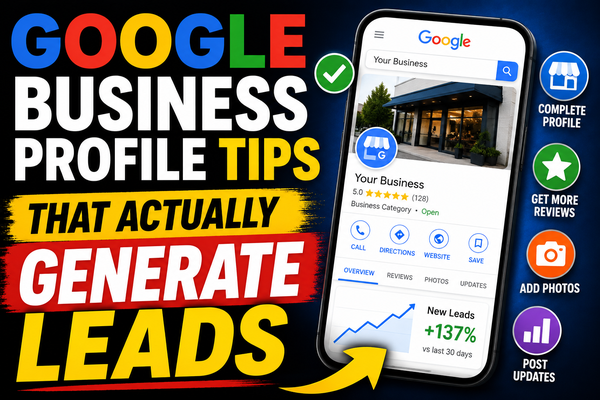
When people search online for the products or services your business offers, your website usually isn't the first thing they see. In most cases, your Google Business Profile appears first, making it one of the most important tools for attracting new customers. It's a little box on the right-hand side of Google, with your name, your star rating, your hours, and maybe a photo or two. That box is your Google Business Profile, and whether you've ever touched it or not, it's already doing a job — good or bad — for your business.
At CARS GOLD, we've watched this play out from the inside. Someone searches "used cars Highlands North" or "car dealership near me," and long before they land on our website, they've already formed an opinion based on that little box. If it looks thin, outdated, or has three grumpy reviews sitting there unanswered, they scroll past us. If it looks alive, current, and trustworthy, they call.
So this isn't theory. Here's what we've actually learned about turning a Google Business Profile from a dusty listing into something that brings in real enquiries.
Start By Actually Claiming and Verifying It
This sounds almost too basic to mention, but it's worth saying anyway: a shocking number of businesses have a Google Business Profile that nobody at the company controls. Maybe someone set it up years ago and left the company. Maybe it was auto-generated by Google and never claimed at all.
If you haven't personally logged in and verified ownership, do that first. Everything else on this list depends on it. Go to google.com/business, search for your listing, and follow the verification steps — usually a phone call, a postcard, or an email, depending on your business type.
Fill In Every Single Field, Not Just the Obvious Ones
Most business owners fill in their name, address, and phone number, and then stop. That's maybe 30% of what Google actually lets you do.
Go back into your profile and look at everything else: your business hours (including special hours for public holidays — South Africans check this constantly around Easter and December), your service area, your business description, the categories that describe what you do, and any attributes like "wheelchair accessible" or "free Wi-Fi" that might apply.
The category selection matters more than people realise. If you're a used car dealership, don't just pick "Car dealer" and move on. Add secondary categories if they genuinely apply — things like "Used car dealer" or "Car finance and loan company" if you offer financing. Google uses these categories to decide which searches you show up for, so being vague here costs you visibility you'll never even know you lost.
CARS GOLD tip: Write your business description like you're explaining what you do to a friend, not like you're writing an advert. Google's algorithm and real customers both respond better to plain, honest language than to sales-speak.
Photos Do More Work Than You'd Think
Listings with photos get significantly more requests for directions and website clicks than listings without them, according to Google's own guidance for business owners. But it's not just about having photos — it's about having the right ones, and having new ones regularly.
Here's what tends to work:
- Real photos of your premises, taken during the day, showing the actual street view someone would see when they arrive
- Photos of your team, because people trust faces more than logos
- Photos of your actual stock or work, not stock imagery pulled off the internet — customers can tell the difference, and so can Google
- Fresh photos added regularly, not just a set of five photos uploaded once in 2021 and never touched again
If you're a dealership like ours, this means photographing actual vehicles on the lot, not using manufacturer stock images. A slightly imperfect real photo of a real car builds more trust than a glossy stock photo ever will, because buyers are specifically worried about being misled — and a real photo signals you have nothing to hide.
Reviews Are the Single Biggest Lever You Have
If you only do one thing from this whole article, focus on reviews. They influence two things at once: whether people trust you enough to contact you, and whether Google decides to rank you well for local searches in the first place.
The mistake most businesses make isn't having bad reviews — it's having too few reviews of any kind, and never responding to the ones they do get.
A few things that genuinely move the needle:
Ask at the right moment. The best time to ask for a review is right after you've delivered something good — right after the sale is finalised, right after the service was completed, right after the problem was solved. Don't wait weeks and then send a generic request; by then the moment has passed and people forget.
Make it easy. Send a direct link to your review page rather than asking people to "search us on Google and leave a review." Every extra step someone has to take cuts your response rate.
Respond to every single review, good and bad. This is the part people skip, and it's the part that matters most. When you reply to a positive review, it shows future customers that you're engaged and appreciative. When you reply to a negative review calmly and professionally, it often matters more to onlookers than the negative review itself — it shows how you handle problems, which is exactly what a nervous buyer wants to know before they hand over money.
Never fake them. It's tempting, especially early on, to ask friends and family to leave reviews or to buy them outright. Google is good at detecting patterns like this, and getting caught can mean your entire profile gets suspended. It's not worth the risk, and it's not necessary — steady, real reviews collected over time beat a fake burst every time.
Use the Posts Feature Like a Mini Noticeboard
Most people don't know that Google Business Profile lets you publish short updates directly onto your listing, similar to a social media post. These show up right there in the search results box, which means they're some of the most visible content your business will ever publish.
Use this space for things that are genuinely timely: a new arrival, a weekend special, an event, a change in hours. Avoid making every post a hard sell — a mix of useful information and the occasional offer tends to perform better than constant "buy now" messaging.
The posts do expire after a while, so this only works if you treat it as an ongoing habit rather than a once-off task. Even ten minutes a week keeps your listing looking active, which subtly signals to both Google and customers that you're a real, currently operating business.
Get the Questions and Answers Section Working For You
There's a Q&A feature on Google Business Profiles that almost nobody uses properly, and it's a genuine missed opportunity. Anyone can ask a public question on your listing, and anyone — including strangers who've never dealt with you — can answer it. That means wrong answers can sit there for months if you're not watching.
The fix is simple: seed it yourself. Post the questions you get asked most often — "Do you offer finance?", "Can I trade in my current car?", "Are your vehicles roadworthy certified?" — and answer them yourself, clearly and honestly. This does two things: it gets ahead of confusion before it happens, and it gives potential customers instant answers without them having to phone you and ask.
Keep an Eye on Your Insights
Inside your Google Business Profile dashboard, there's a section showing how people found you — what they searched to reach your listing, whether they called, requested directions, or visited your website. This is genuinely useful information and it's free.
Check it monthly, not daily. Look for patterns: are people searching for terms you haven't optimised for? Is there a spike in profile views after you post something? This tells you what's actually working, rather than what you assume is working.
The Honest Truth About Consistency
None of these tips are complicated on their own. The businesses that get real leads from their Google Business Profile aren't doing anything clever that others don't know about — they're just doing the basics consistently, month after month, while everyone else sets it up once and forgets it exists.
A profile with fresh photos, active posts, and a steady stream of responded-to reviews will outperform a "perfect" profile that was set up once and never touched again. Treat it the way you'd treat a shop window — worth dusting off regularly, not just decorating once and walking away.
If you're a small business owner reading this and thinking "I don't have time for all of this," start with just two things: respond to every review you get, and add one new photo a week. Those two habits alone will move the needle more than most people expect.
